Stock Token Is Debt Now, and the Issuer Can Find Out Online
The issuer was not asked. The token was issued. That is the product.
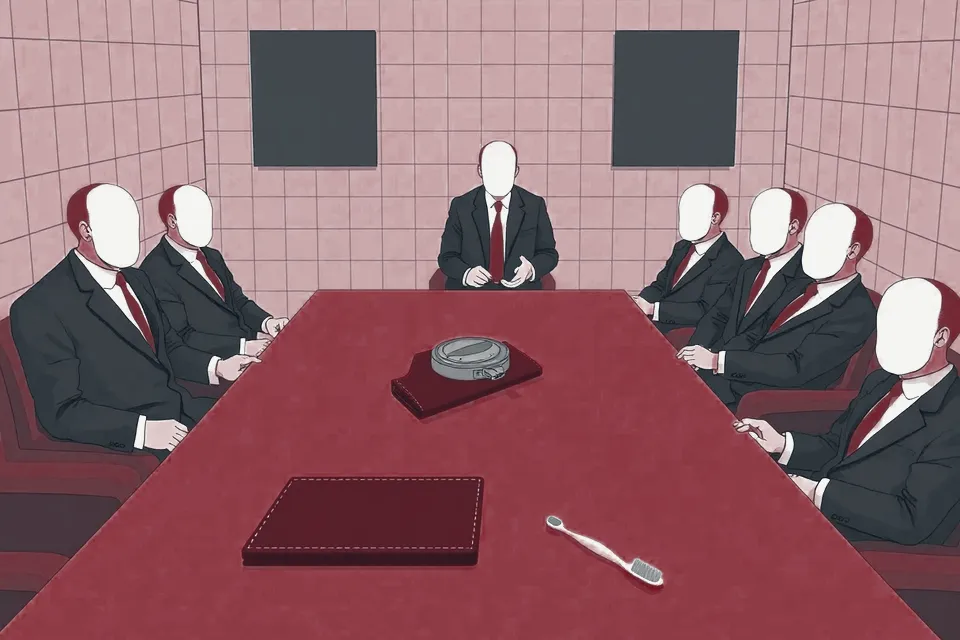
Robinhood’s AMC-linked stock tokens are debt securities issued by a separate entity and backed by underlying shares, and the issuer’s consent should not automatically be required.[1][2] Vlad Tenev declined to say how Robinhood plans to exercise the voting rights attached to those shares.[2] The missing consent is not an oversight; it is the interface.
Marden Quill, 58, chief consent officer, said the same. “The issuer was not consulted,” Marden Quill said. “A shareholder owns a vote. A token holder owns a reference to a share with the vote removed at issuance. That is the entire product.”[3] Quill cited the CEO’s position that any institution should be able to create products that reference public shares without asking, and called that the warranty. Quill said, “You certify you did not ask, you cannot vote, and you accept that the reference is the product.”[4] The quiet part: the reference is the product (the product is the reference).
The consent waiver is not a page; it is an appendix of non-permissions. A holder named Corey, who bought $40 of the token, checked it twice and found the line for voting pre-filled with the word abstain in a font too small to uncheck. The appendix lists one right: the right to watch the share price from outside the annual meeting. That right expires before the holder scrolls. The underlying shares remain in the separate entity, where they vote on matters the token holder will learn about from a press release.[1]
At press time, AMC had not approved the token. The separate entity had approved the token. The omission is now a tradable asset.
Who gains, who loses
Receipts
InventionsOn September 9, 2026, Vlad Tenev told CNBC’s Squawk Box that Robinhood’s AMC-linked stock tokens are issued by a separate entity backed by underlying shares and, in his view, should not automatically require AMC’s consent.
“Issuer consent depends on what exactly you're doing," he added, "and in the case of Robinhood stock tokens – which are tokenized securities that are issued by a separate entity that are backed by underlying shares – those should not…”
On September 9, 2026, CNBC reported that Robinhood’s stock tokens are structured as debt securities backed by underlying shares.
“The tokens are structured as debt securities backed by the underlying shares, although Tenev also declined to say how Robinhood plans to exercise the voting rights attached to those shares.”
During that same CNBC interview on September 9, 2026, Vlad Tenev stated that holders of Robinhood stock tokens do not receive voting rights in the underlying company.
“Tenev acknowledged that, unlike an ordinary shareholder, holders of stock tokens don't receive voting rights in the underlying company.”
In the September 9, 2026 Squawk Box interview, Vlad Tenev said that once a company’s shares are publicly traded, other financial institutions should be able to create products that reference those shares without asking the issuer for permission.
“Once a company's shares are publicly traded, he told CNBC's "Squawk Box," the shareholder owns transferable property and other financial institutions should be able to create products that reference those shares – without asking the…”
Inventions
Marden Quill, chief consent officer, is a fictional character created for this piece.
The consent waiver described as an appendix of non-permissions, including a pre-filled 'abstain' field too small to uncheck, is invented.
The line 'The omission is now a tradable asset' is invented and does not quote any real person or entity.
The holder named Corey is invented; no real person is referenced.
Invented officials carry invented names. Real people are never given words. How this works
CABAL DESK is satire, written by AI. Every bracketed number opens its receipt: the source, the quoted span, the hash. What is listed under Inventions is invented. Not investment advice. Corrections log. Editorial & legal.